
AIKEN, S.C. – Savannah River Nuclear Solutions (SRNS) is enhancing its industrial supply base through the Supplier Technical Assessment and Validation (STAV) Program and partnerships with the state Manufacturing Extension Partnership (MEP). This initiative aims to increase the capability and capacity of SRNS suppliers and manufacturers to meet and perform critical mission scopes for the Department of Energy (DOE) and the National Nuclear Security Administration (NNSA).
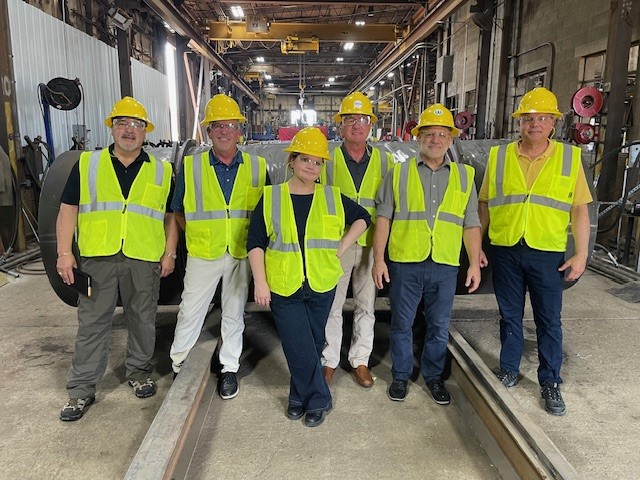
“The STAV Program is a significant benefit for our suppliers and manufacturers, bridging the gap between part requirements, manufacturing capabilities and demonstrated execution,” said Wayne Potter, SRNS Supplier Relationship Development (SRD) Manager for NNSA Capital Projects, Supply Chain Management. “Participating in a STAV helps suppliers better align procurement requests with core competencies, highlights additional capabilities, and creates proactive risk mitigation strategies.”
Established at SRNS in 2023, this program was adapted from the HII Navy Shipbuilding Sector to ensure that manufacturers could meet the critical schedule requirements for the Savannah River Plutonium Processing Facility’s pit production mission, initially focusing on glovebox manufacturers.
“The program provided a method to quickly determine the technical capability and capacity at each glovebox manufacturer we were considering,” said Hector Lopez-De Jesus, SRNS Senior Procurement Director. “The STAV results gave us current and forecasted manufacturing capacities. This was critical to level-load our procurements and support the project delivery schedule.”
Today, STAVs have expanded to include engineering and balance-of-plant equipment and aim to scale up across SRNS’ manufacturing supply base to enhance DOE’s project and mission success.
To date, SRNS has completed 25 STAVs and 18 MEP Lean assessments and work scopes. These efforts align with recent executive orders linked to manufacturing, ensuring SRNS can vet suppliers to meet national security needs.
“STAVs are like a business health assessment, reviewing things like facilities, expansion capability, staffing, technical rigor, machines, and manufacturing flow,” said Candice Kitchens, SRNS SRD Lead. “After the STAV is performed, state MEPs develop Lean/Sigma work scopes that are focused on any weaknesses and risks identified to improve overall business operations.”
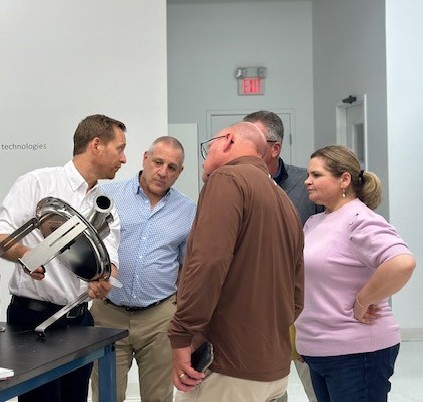
Differing from Quality Management System audits, STAVs help build strong relationships with key manufacturers and suppliers, verify their capabilities, and provide MEP resources if needed. This process reduces cycle-time, defects, and delays while increasing overall assembly capacity. State MEPs can access grants for process improvements, aiding business growth and new supplier development at no cost to SRNS. Typically conducted over several days, these assessments offer an in-depth review of the supplier’s people, processes and equipment.
The SRD team recently identified two suppliers to participate in a STAV event to meet increased production demands in support of DOE/NNSA customers.
“SRNS helped us identify several needs within our organization to meet increasing demands,” said Patrick Halligan, Carolina Fabricators Sales Manager. “The SRD team then connected us with the South Carolina MEP, where we completed staff and management training to enhance our current Nuclear Quality program and our readiness to provide materials for our customers. This unique team of experts is unlike any other — they were genuinely interested in helping us improve our overall business and manufacturing operations, making us a more efficient supplier for national security needs.”
Douglas Henderson, Westerman’s Director of Government Services, added, “Our NQA-1 system, skilled workforce, and U.S.-based manufacturing capabilities make us a strong partner to support development initiatives at SRS. With support from the STAV and Ohio MEP teams, we are now advancing projects in IT security and talent acquisition to strengthen our supplier readiness.”
According to Dan Bittner, SRNS SRD Lead, proactive customer and supplier collaboration is vital in the manufacturing supply chain to prevent unnecessary costs and unplanned material issues as production increases.
“Before this program, SRNS relied on suppliers and manufacturers to meet our purchase order requirements without verifying their capabilities,” explained Bittner. “This lack of verification led to delays, excessive engineering design requests, missed delivery dates, and inefficient processes. Today, our key suppliers benefit from an honest review and manufacturing assessment, supported by MEP expertise and funding streams, to help them improve and sustain their businesses.”
SRNS plans to expand the program across the DOE Complex, including joint STAV opportunities. This initiative will help shared suppliers become more agile, preventing DOE sites from competing for limited supplier capacity. By aligning material needs with an awareness of other DOE sites’ requirements and the suppliers’ actual capabilities, SRNS aims to enhance coordination and efficiency.
Savannah River Nuclear Solutions, a Fluor and HII partnership company, is responsible for the management and operations of the Department of Energy’s Savannah River Site, located near Aiken, South Carolina.
SRNS-2025-1647