
AIKEN, S.C. – In June, Savannah River Nuclear Solutions (SRNS) launched a pilot program in the Savannah River Site’s (SRS) H Area that transforms maintenance work planning and control processes. The initiative moves away from a one size fits all nuclear standard toward a graded, risk based approach that prioritizes urgency and aligns controls with three defined hazard levels.
The pilot aligns with the Department of Energy (DOE) and the National Nuclear Security Administration’s (NNSA) emphasis on urgency and acceleration. It also follows a broader SRNS modernization effort launched in March 2026 to accelerate non-nuclear, non-complex construction projects through the adoption of commercial requirements paired with OSHA+ safety standards. SRNS is embracing delivery models across maintenance and construction that streamline requirements while reducing cost and schedule impacts.
For decades, SRS maintenance activities have operated under a work-control procedure that applied uniform, rigorous nuclear-facility standards to every job, no matter how small or regardless of risk. While appropriate for certain critical nuclear operations, it unnecessarily complicates others, creating time-intensive work packages for maintenance tasks that pose minimal facility risk or worker hazards.
The newly issued procedure addendum introduces fit-for-purpose work packages based on whether a job is classified as low, medium or high risk. Low-risk or routine tasks with little to no hazards require only basic work package rigor and rely primarily on employee training. Medium-risk tasks may need additional guidance but avoid formal instructions unless necessary. High-risk or non-routine jobs require detailed instructions to ensure safety and effectiveness. The pilot also removes self-imposed requirements not mandated by DOE directives, ensuring facility operations remain fully compliant with DOE expectations while eliminating administrative burdens.
According to Andy Tisler, SRNS Senior Vice President of Infrastructure Modernization and Sustainment, the new approach is projected to cut work package planning cycle times by 65 to 75%, enabling maintenance teams to respond with greater speed and precision.
“NNSA has emphasized responsiveness and proactive solutions across the Nuclear Security Enterprise, urging teams to anticipate needs and act swiftly,” Tisler said. “With the expected reductions in planning cycle times, this means increasing efficiency where it matters most — supporting mission operations safely and without delay.”
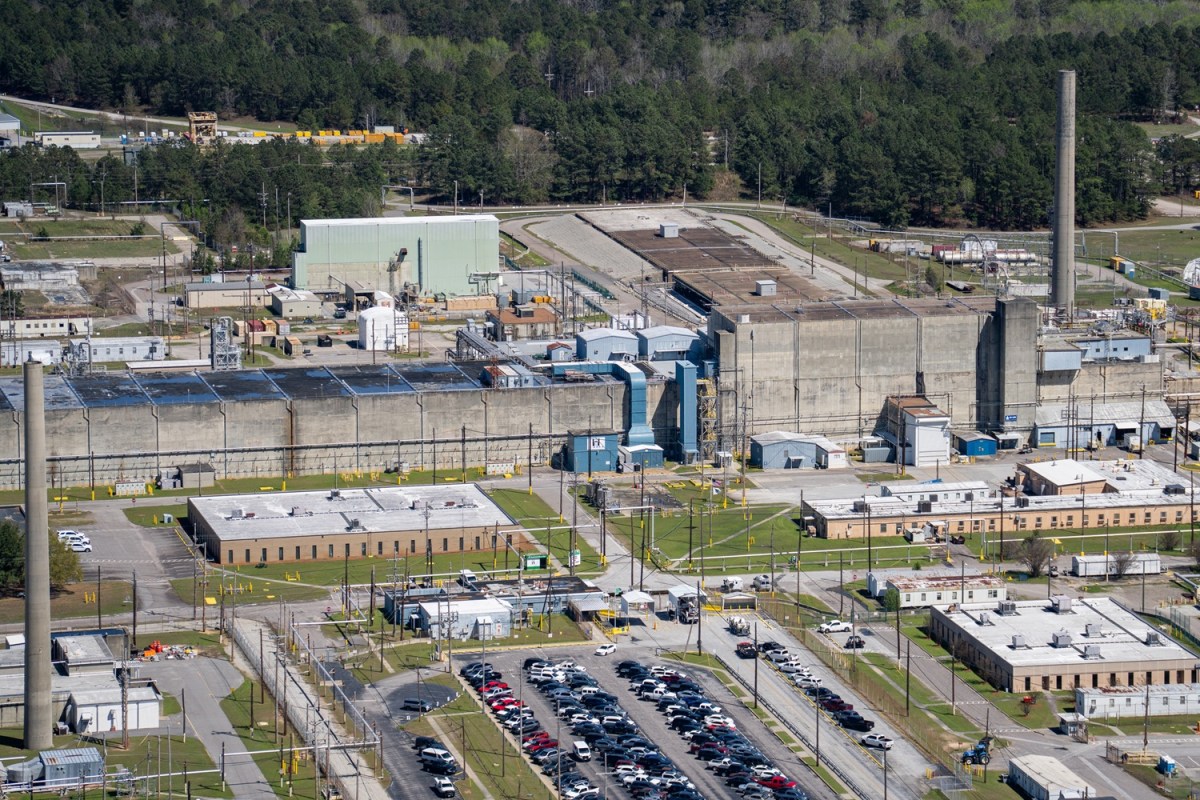
The pilot will initially focus on maintenance activities supporting Environmental Management Operations (EMO) missions, specifically those conducted in the Site’s H Canyon. As the nation’s only operating, production‑scale, radiologically shielded chemical separations facility, H Canyon is uniquely positioned to lead this modernization effort.
In March, DOE’s Office of Environmental Management (EM) announced in a news release the decision to restart HB Line operations at SRS, providing the capability to power the nation’s nuclear future by recycling surplus plutonium and partnering with industry leaders to produce fuel for advanced nuclear reactors. Restarting HB Line will accelerate EM’s plutonium disposition mission by 10 to 13 years and creates an opportunity to recover valuable isotopes available in limited quantities domestically.
“Implementing these new processes will significantly improve our efficiency and effectiveness,” said Kevin Moeller, SRNS H Canyon Facility Manager. “In H Canyon, where operational tempo is high and legacy infrastructure requires constant attention, the ability to streamline work preparation without compromising safety is a major step forward for mission readiness.”
David Sanders, SRNS Director of Site Maintenance and Facility Support, added, “This pilot is about working smarter, not harder. If equipment is already locked out and poses no hazards, complex packages are replaced by simple, two- to three-page packages. By focusing planning resources where they matter most, we’re freeing up our teams to act with clarity and confidence.”
SRNS’ new graded work package approach reflects a broader cultural and operational shift happening across the DOE Complex. For SRNS, it means challenging the status quo and setting a new standard for maintenance planning in both nuclear and non-nuclear environments.
Savannah River Nuclear Solutions, a Fluor and HII partnership company, is responsible for the management and operations of the Department of Energy’s Savannah River Site, located near Aiken, South Carolina.
SRNS-2026-1756