
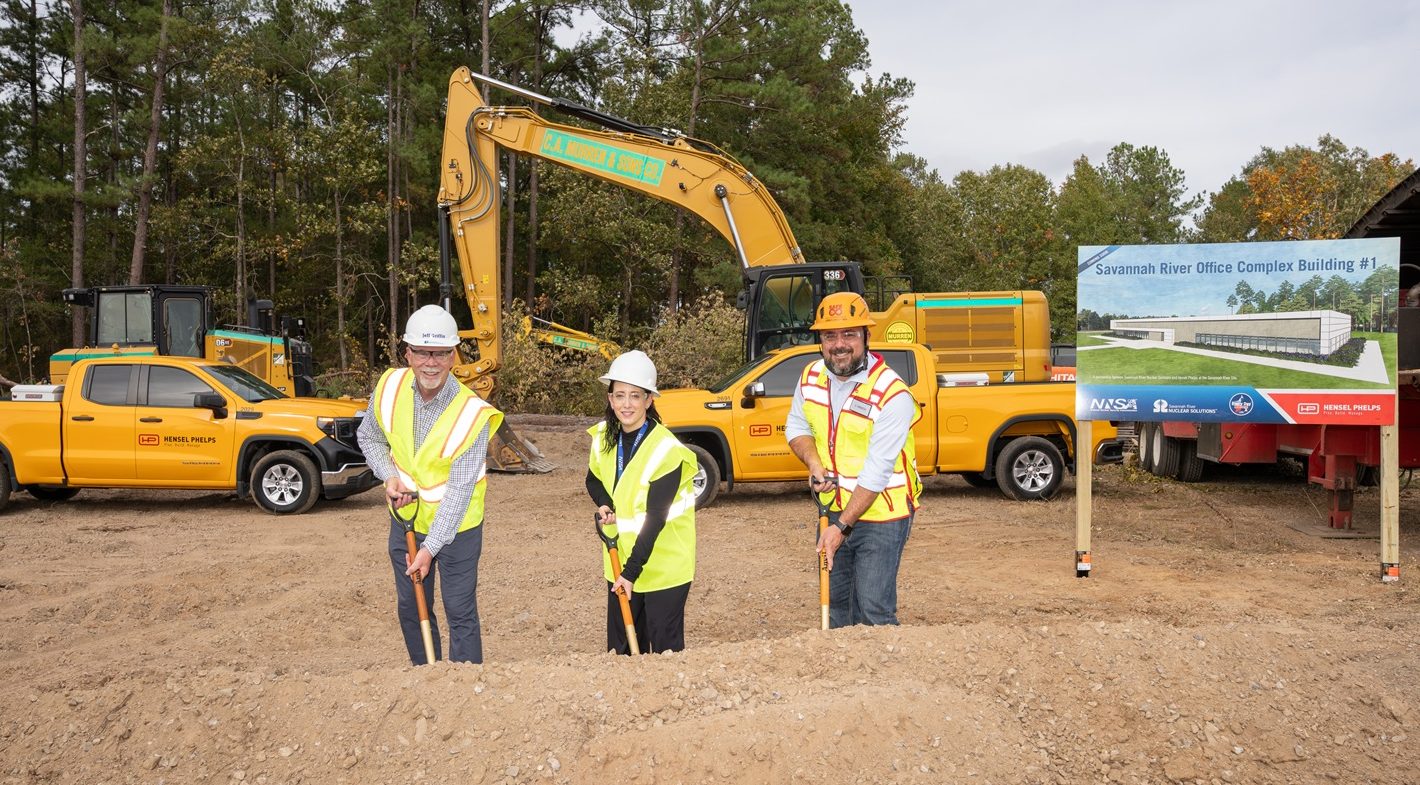
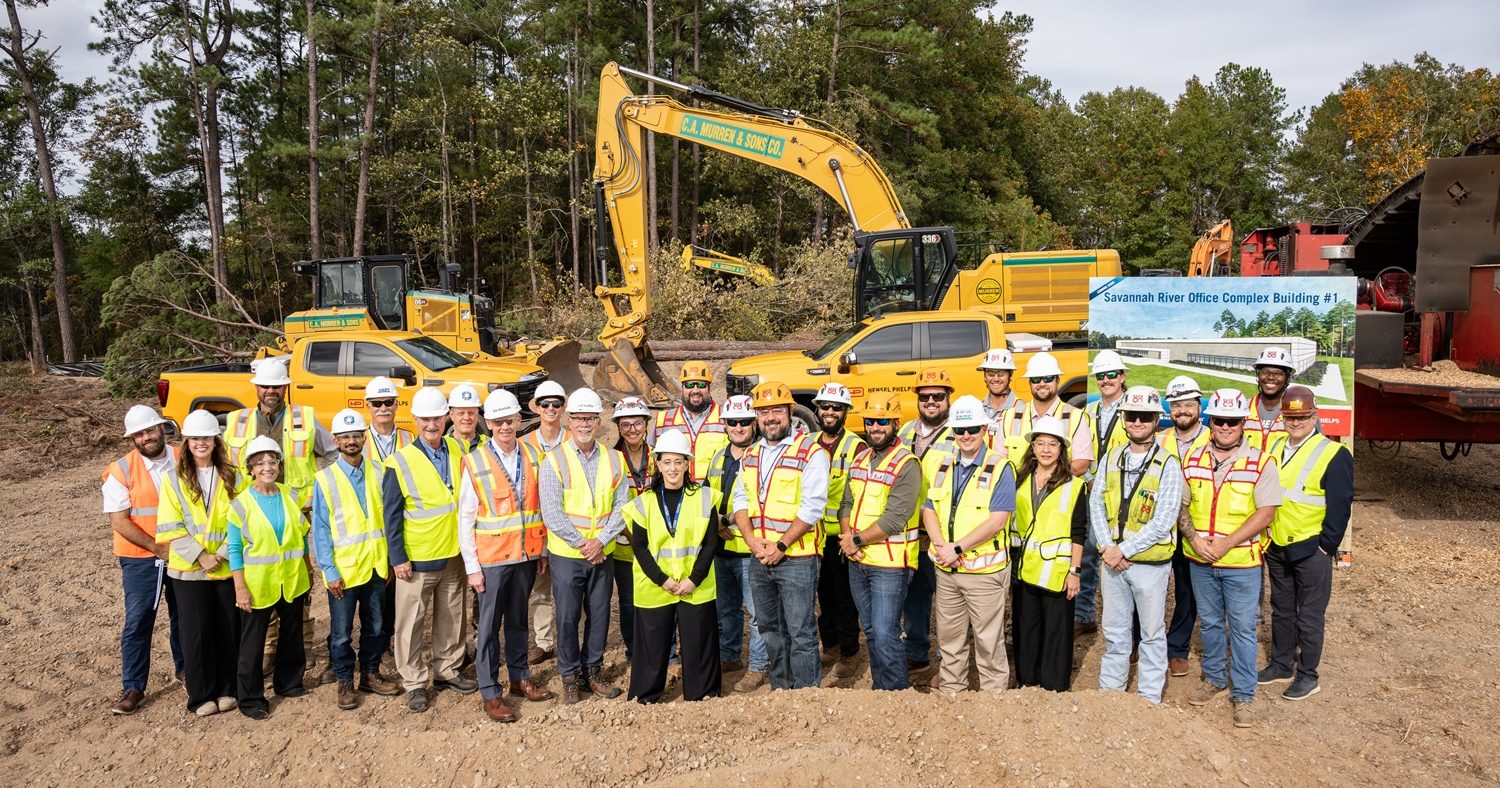
AIKEN, S.C. – The National Nuclear Security Administration (NNSA), Savannah River Nuclear Solutions (SRNS), and construction partner Hensel Phelps broke ground Nov. 4 on the Savannah River Office Complex (SROC) facility, marking an important step in the Savannah River Site’s (SRS) long-term infrastructure revitalization strategy.
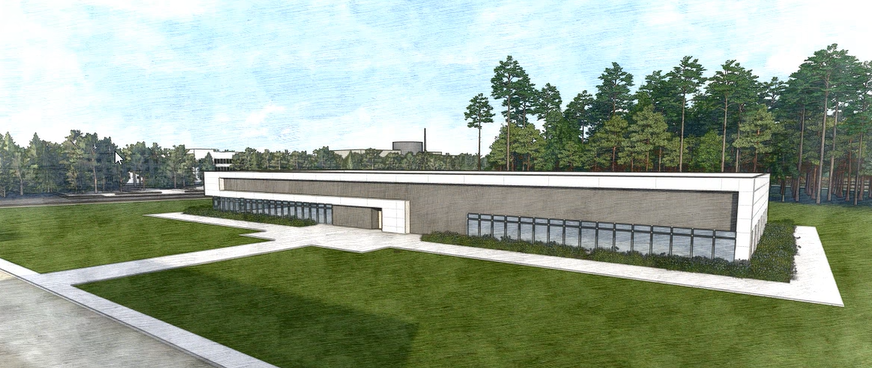
Located in the Site’s H Area, the new 22,000 sq. ft. facility will provide permanent office spaces for personnel supporting the Savannah River Tritium Enterprise, Environmental Management Operations, and other mission activities. It will replace end-of-life modular office trailers with modern, reliable workspaces designed to meet the Site’s evolving operational needs.
“Restarting production is not simply a matter of turning systems back on,” said Jeff Griffin, SRNS President and Chief Executive Officer. “It requires rebuilding capabilities, replacing aging infrastructure and constructing new facilities that support today’s operational demands on a fast-paced timeline.”
The project comes as SRS expands its national security mission portfolio and prepares for sustained workforce growth. Looking ahead, the SROC design will provide a repeatable approach for developing mission support facilities needed to execute major construction projects, including the Savannah River Plutonium Processing Facility (SRPPF), HB Line restoration, and the Tritium Finishing Facility. SRPPF recently received NNSA approval of Critical Decision-2/3, authorizing the project to proceed with full-scale construction.
SROC is the first facility to be delivered through SRNS’ Standardized Acquisition and Recapitalization, or STAR, design-build model. The approach is intended to accelerate delivery of lower-risk, non-nuclear support facilities by applying standardized designs, engaging construction partners earlier, clearly defining requirements and reducing unnecessary review cycles.
Designed to meet NNSA’s commercial delivery target of less than $1,000 per square foot, the facility will provide improved workspaces while meeting rigorous safety, security and reliability requirements. SRNS expects the STAR model to improve schedule predictability, increase industry participation and reduce labor costs by an estimated 30%–45%, redirecting those funds toward mission-critical investments.
“This project showcases SRNS’ innovative commercial construction strategy, which is streamlining the delivery of lower-risk, non-nuclear facilities at SRS,” said Andy Tisler, SRNS Senior Vice President, Infrastructure Modernization and Sustainment. “By engaging contractors earlier, defining requirements more clearly and reducing unnecessary reviews, SRNS is creating a more efficient project delivery model.”
SRNS has requested recapitalization funding for additional support facilities during the next five years, with further STAR-based administrative buildings anticipated over the coming decade.
“Aging infrastructure must be revitalized to continue to support the nation’s nuclear deterrent and deliver on our mission,” said Freddie Grimm, SRNS Senior Vice President for Strategic Planning and Integration. “By utilizing a standardized design, SRNS can accelerate procurement, reduce engineering costs and replicate successful construction practices across future projects.”
The investment also supports the Site’s ability to attract and retain the skilled workforce needed to carry out its expanding missions.
“Competition for talent is greater than ever, and the workplace matters,” said Dean Van Pelt, SRNS Director of Strategic Programs. “We’re creating an environment where people want to build careers, grow professionally and contribute to something larger than themselves.”
Hensel Phelps brings extensive federal construction experience to the project, having completed more than 450 federal and defense projects totaling approximately 65 million square feet. Locations for future facilities align with the Site’s Campus Master Plan and were selected through evaluations of mission needs, accessibility, available utilities and environmental factors. Planning also considered proximity to water, sewer, electricity and communications infrastructure to promote efficient operations while minimizing development costs and environmental impacts.
Established by Congress in 2000, NNSA is a semi-autonomous agency within the U.S. Department of Energy responsible for enhancing national security through the military application of nuclear science. NNSA maintains and enhances the safety, security, and effectiveness of the U.S. nuclear weapons stockpile; works to reduce the global danger from weapons of mass destruction; provides the U.S. Navy with safe and militarily effective nuclear propulsion; and responds to nuclear and radiological emergencies in the U.S. and abroad.
Savannah River Nuclear Solutions, a Fluor and HII partnership company, is responsible for the management and operations of the Department of Energy’s Savannah River Site, located near Aiken, South Carolina.
SRNS-2026-1790